-
 dexter
- Published:
- Last updated:
- Templates & Verticals
- 184
- 0
Most people think a website builder gives you one generic template and lets you change the colors. That works fine if you are building a simple landing page. It does not work if you are running a restaurant, managing job applications, or selling products online.
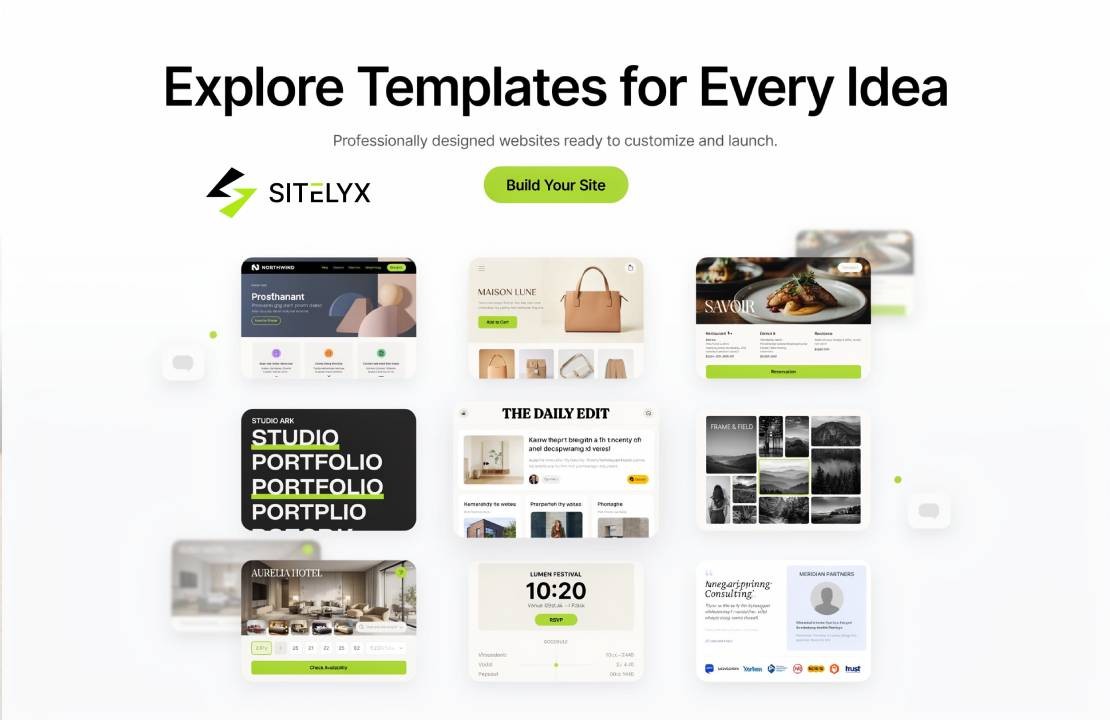
Sitelyx takes a different approach. Instead of one generic template stretched to fit every use case, there are 18 purpose-built templates, each designed around a specific need. Below is every type, what it is built for, who actually uses it, and what comes included.
1. Agency
Built for marketing agencies, design studios, and consulting firms that need to look established from the first visit.
Who uses it: small agencies, freelance teams, and consultants pitching to bigger clients.
What's included: a services breakdown, team section, client logos, a portfolio area, and a contact form designed to convert visitors into leads.
2. Blog / Article
A clean, readable layout built for writers who want their work to actually get read.
Who uses it: personal bloggers, niche writers, and anyone publishing long-form content regularly.
What's included: post categories, tags, an RSS feed, author bio sections, and a layout that prioritizes readability over decoration.
3. Barber Shop
A bold, masculine design built specifically for grooming businesses, not adapted from a generic service template.
Who uses it: barbershops, men's salons, and grooming studios that want online booking without paying for a separate scheduling app.
What's included: an appointment booking system, a service and pricing menu, a photo gallery, and a map showing your location.
4. Construction
Built for contractors and builders who need to show finished work, not just describe it in text.
Who uses it: construction companies, renovation contractors, and civil engineering firms.
What's included: a project showcase, services breakdown, team profiles, and a quote request form that captures leads directly.
5. Consultancy
Designed around credibility. Consultants sell trust before they sell anything else, and this template is built to establish that fast.
Who uses it: business consultants, life coaches, HR advisors, and strategy firms.
What's included: a services page, case studies section, testimonials, and a booking form for consultations.
6. Course
A structured layout for anyone teaching something online, whether that's a single course or a full curriculum.
Who uses it: independent educators, tutors, and trainers building their first online course.
What's included: course listings, a curriculum breakdown, instructor bio, and an enrollment flow.
7. Donation
Built for causes, not commerce. The entire layout is designed to build trust and show impact, not push a sale.
Who uses it: nonprofits, charities, and individuals running fundraisers for specific causes.
What's included: donation forms, campaign progress tracking, an impact section, and a donor recognition area.
8. Ecommerce

A complete online store, not a basic product list bolted onto a regular website.
Who uses it: independent sellers, small retailers, and anyone moving away from marketplaces that take a cut of every sale.
What's included: product listings, a shopping cart, secure checkout, inventory tracking, and support for multiple payment gateways. Sitelyx takes zero commission on what you sell.
9. Event
Built for one-time or recurring events that need to build excitement before the date arrives.
Who uses it: conference organizers, concert promoters, and anyone hosting a community gathering.
What's included: a countdown timer, event schedule, speaker or performer profiles, ticket links, and a venue map.
10. Hotel Booking
Designed for hospitality businesses that live or die by how easy it is to book a room.
Who uses it: small hotels, guesthouses, and boutique vacation rentals.
What's included: room listings with photos and rates, a live booking calendar, an amenities section, and guest reviews.
11. Job Board
A two-sided platform where employers post roles and candidates apply, built without needing a separate applicant tracking tool.
Who uses it: recruiters, niche job boards, and companies hiring for multiple roles at once.
What's included: category and location filters, individual job listing pages, application forms, and employer profile pages.
12. Newspaper
A multi-category layout built for publishers who need more structure than a basic blog offers.
Who uses it: independent media outlets, niche news sites, and content teams publishing across multiple categories.
What's included: a breaking news ticker, category navigation, author pages, and space for advertising banners.
13. Photography
A visual-first layout where the images carry the entire site, not the text.
Who uses it: photographers, videographers, and visual artists who need their work to load fast and look sharp.
What's included: masonry and grid gallery layouts, lightbox previews, client gallery sections, and a booking inquiry form.
14. Portfolio
The most flexible template on the list, built for anyone whose work speaks louder than their resume.
Who uses it: designers, developers, illustrators, architects, and any creative professional building a personal brand.
What's included: a project grid, individual project detail pages, a skills section, and a contact form.
15. Restaurant
Built around the two things that actually drive restaurant bookings: the menu and how easy it is to reserve a table.
Who uses it: restaurants, cafes, food trucks, and catering businesses.
What's included: an online menu with categories, a table reservation system, a food photography gallery, and a location map.
16. Software Business
A SaaS-style landing page built for software products that need to convert visitors into trial signups.
Who uses it: indie software founders, app developers, and small tech startups.
What's included: feature highlights, pricing tiers, integration showcases, a changelog, and a free trial call-to-action.
17. Support Ticket
A help desk built into your website, instead of bolted on through a third-party tool.
Who uses it: software companies and service businesses that need to manage customer support requests in one place.
What's included: a ticket submission form, status tracking, a knowledge base, and an FAQ section.
18. Wedding
A romantic, personal layout built for couples who want one place to share everything about their big day.
Who uses it: engaged couples planning their wedding and sharing details with guests.
What's included: ceremony and reception details, an RSVP form, a photo gallery, a couple's story section, and a countdown timer.
How to Choose the Right One
If you are not sure which template fits, ask yourself one question: what does a visitor need to do on my site?
If they need to read your work, pick Portfolio or Photography. If they need to book something, pick Hotel Booking, Barber Shop, or Restaurant. If they need to buy something, pick Ecommerce. If they need to apply for something, pick Job Board.
Every template on Sitelyx is free to preview before you choose, so you can click through any of them as a live, working website before committing to one.
You Are Not Locked In
One detail worth knowing: choosing a template is not a permanent decision. You can switch templates from your dashboard later if your needs change. Plenty of users start with a basic Portfolio template and move to Ecommerce once they start selling.
Final Thought
Most "free website builders" give you one shape and ask you to make it fit. Sitelyx gives you 18 shapes built around how real businesses and individuals actually use a website.
Browse the full template library and preview any of them live at sitelyx.
Related Reading
- How to Build a Free Website in 5 Minutes on Sitelyx
- Sitelyx vs Duda: Which Website Builder Is Right for You?
- Free Portfolio Website for Designers: Build Yours in 10 Minutes
Login to Leave a Comment
Related Blog
- 24 Sep 2026
- 3
- 0 Comment
Is Wix a Good Website Builder? An Outsider`s Review
Is Wix a good website builder in 2026? We weighed real user ratings, independent test data and Wix's own numbers, including where Wix genuinely wins.
- 24 Sep 2026
- 21
- 0 Comment
How Much Does It Cost to Build a Website in 2026?
What should a website cost in 2026? Survey data from 300+ agencies, real builder prices, line-item costs and three sample budgets from $0 to $20,000.
- 23 Sep 2026
- 21
- 0 Comment
How Long Does It Take to Build a Website? Real Numbers
How long does it take to build a website? Real 2026 survey data from 300+ web agencies, plus timelines for AI, DIY builders, WordPress and custom builds.
Comments (0)